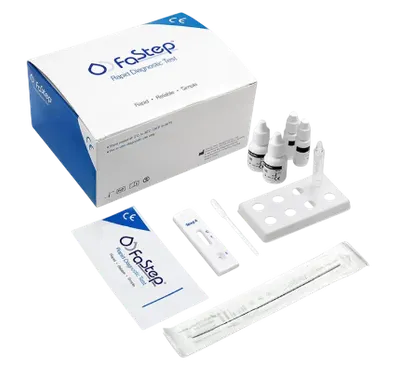
New
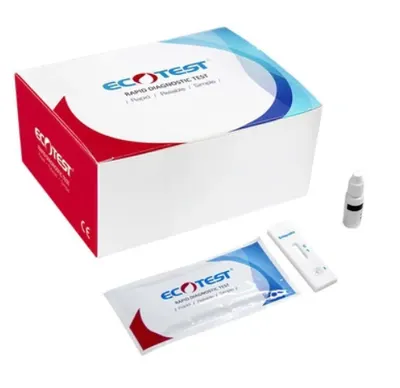
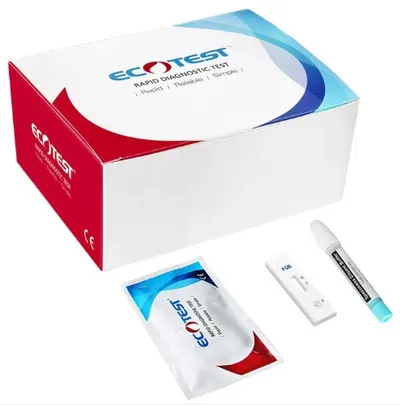
Helicobacter pylori antigen rapid test (feces)
Rapid visual immunoassay for the qualitative detection of Helicobacter pylori antigens in human fecal specimens.
Price on request
Add this device to your quote list to request its price.ТОО "FSA KZ (ФСА КЗ)", Almaty, Kazakhstan, BIN 210940036794
- Brand
- Rapid
- Category
- Rapid tests
Description
Intended use
The H. pylori Antigen Rapid Test (feces) is a rapid visual immunoassay for the qualitative presumptive detection of Helicobacter pylori antigens in human fecal specimens.
The H. pylori Antigen Rapid Test is intended to aid in the diagnosis of H. pylori infection.
Introduction
Helicobacter pylori is a spiral-shaped, gram-negative bacterium with typical flagella that affects the gastric mucosa. It causes several gastrointestinal diseases, such as non-ulcer dyspepsia, gastric and duodenal ulcer and active gastritis, and may even increase the risk of gastric adenocarcinoma; it is therefore classified as a type I carcinogen.
Many H. pylori strains have been isolated: among them, the strain expressing the CagA antigen is strongly immunogenic and, accordingly, of great clinical importance, as it is associated with a cytotoxic factor. Many literature articles widely report that infected patients with antibodies to the CagA gene product have up to five times higher risk of gastric cancer than a control group infected with a CagA-negative bacterial strain.
The presence of the gene itself determines persistence of infection and ulceration, and the associated protein, the VacA toxin, is often the main cause of gastric mucosal infiltration.
This antigen, associated with others such as CagII and CagC, appears to act as the trigger of a sudden inflammatory reaction that can provoke ulceration (peptic ulcer), allergic episodes and reduced therapy efficacy.
Several invasive and non-invasive approaches are currently available to detect this infection.
Invasive techniques require endoscopy of the gastric mucosa with histological, culture and urease examination, which takes a long time to reach a correct final diagnosis.
Alternatively, non-invasive methods are available, such as the breath test, which is extremely complex and not very selective, or classic ELISA and immunoblot assays.
Similar devices
Whole category