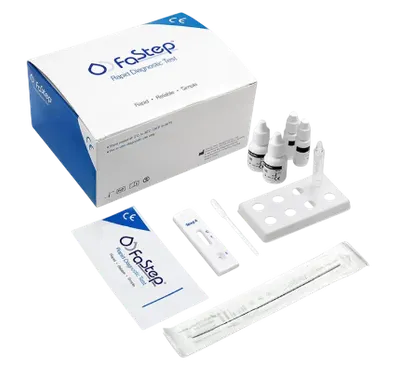
New
Troponin I Diagnostic Rapid Test
Rapid visual immunoassay for qualitative detection of cardiac troponin I in whole blood, serum or plasma; aids in the diagnosis of myocardial infarction.
Price on request
Add this device to your quote list to request its price.ТОО "FSA KZ (ФСА КЗ)", Almaty, Kazakhstan, BIN 210940036794
- Brand
- Rapid
- Category
- Rapid tests
Description
Intended use
The Troponin I Diagnostic Rapid Test (whole blood/serum/plasma) is a rapid visual immunoassay for the qualitative presumptive detection of cardiac troponin I in human whole blood, serum or plasma specimens. The Troponin I Diagnostic Rapid Test is intended to aid in the diagnosis of myocardial infarction (MI).
Introduction
Cardiac troponin I (cTnI) is a cardiac muscle protein with a molecular weight of 22.5 kDa. Troponin I is part of a three-subunit complex comprising troponin T and troponin C. Together with tropomyosin, this structural complex forms the main component that regulates the calcium-sensitive ATPase activity of actomyosin in striated skeletal and cardiac muscle. After cardiac injury, troponin I is released into the blood 4-6 hours after the onset of pain. The release pattern of cTnI is similar to that of CK-MB, but while CK-MB levels return to normal after 72 hours, troponin I remains elevated for 6-10 days, providing a longer window for detecting cardiac injury. cTnI measurement has been shown to be highly specific for detecting myocardial injury in conditions such as the perioperative period, after marathon running and blunt chest trauma. cTnI release has also been reported in cardiac conditions other than acute myocardial infarction (AMI), such as unstable angina, congestive heart failure and ischemic damage due to coronary artery bypass surgery. Because of its high specificity and sensitivity in myocardial tissue, troponin I has recently become the most preferred biomarker of myocardial infarction.
Specimen collection and storage
- The cTnI rapid test device (whole blood/serum/plasma) is intended for use with human whole blood, serum or plasma specimens only.
- Only clear, non-hemolyzed specimens are recommended for this test. Serum or plasma should be separated as soon as possible to avoid hemolysis.
- Perform the test immediately after specimen collection. Do not leave specimens at room temperature for prolonged periods. Serum and plasma specimens may be stored at 2-8 °C for up to 3 days. For long-term storage, specimens should be kept below −20 °C. Whole blood collected by venipuncture should be stored at 2-8 °C if the test is to be performed within 2 days of collection. Do not freeze whole blood specimens. Whole blood collected by fingerstick should be tested immediately.
- Containers with anticoagulants such as EDTA, citrate or heparin should be used for storing whole blood.
- Bring specimens to room temperature before testing. Frozen specimens must be completely thawed and mixed well before testing. Avoid repeated freezing and thawing of specimens.
- If specimens are to be shipped, pack them in compliance with all applicable regulations for the transport of etiological agents.
- Icteric, lipemic, hemolyzed, heat-treated and contaminated specimens may cause erroneous results.
- There is a slight possibility that some whole blood specimens with very high viscosity, or specimens stored for more than 2 days, may not run properly on the test device. Repeat the test with a serum or plasma specimen from the same patient using a new test device.
Similar devices
Whole category